Hey, have you ever wondered why some relationships feel like a smooth sail while others are a constant storm of arguments, jealousy, or that nagging feeling of walking on eggshells? I’ve been there,stuck in cycles of hot-and-cold vibes that left me exhausted. Turns out, a lot of it boils down to something called attachment styles. It’s not some woo-woo theory; it’s backed by decades of psychology research from folks like John Bowlby and Mary Ainsworth. These styles shape how we connect with people from the get-go, starting in childhood but sticking around in our adult love lives.
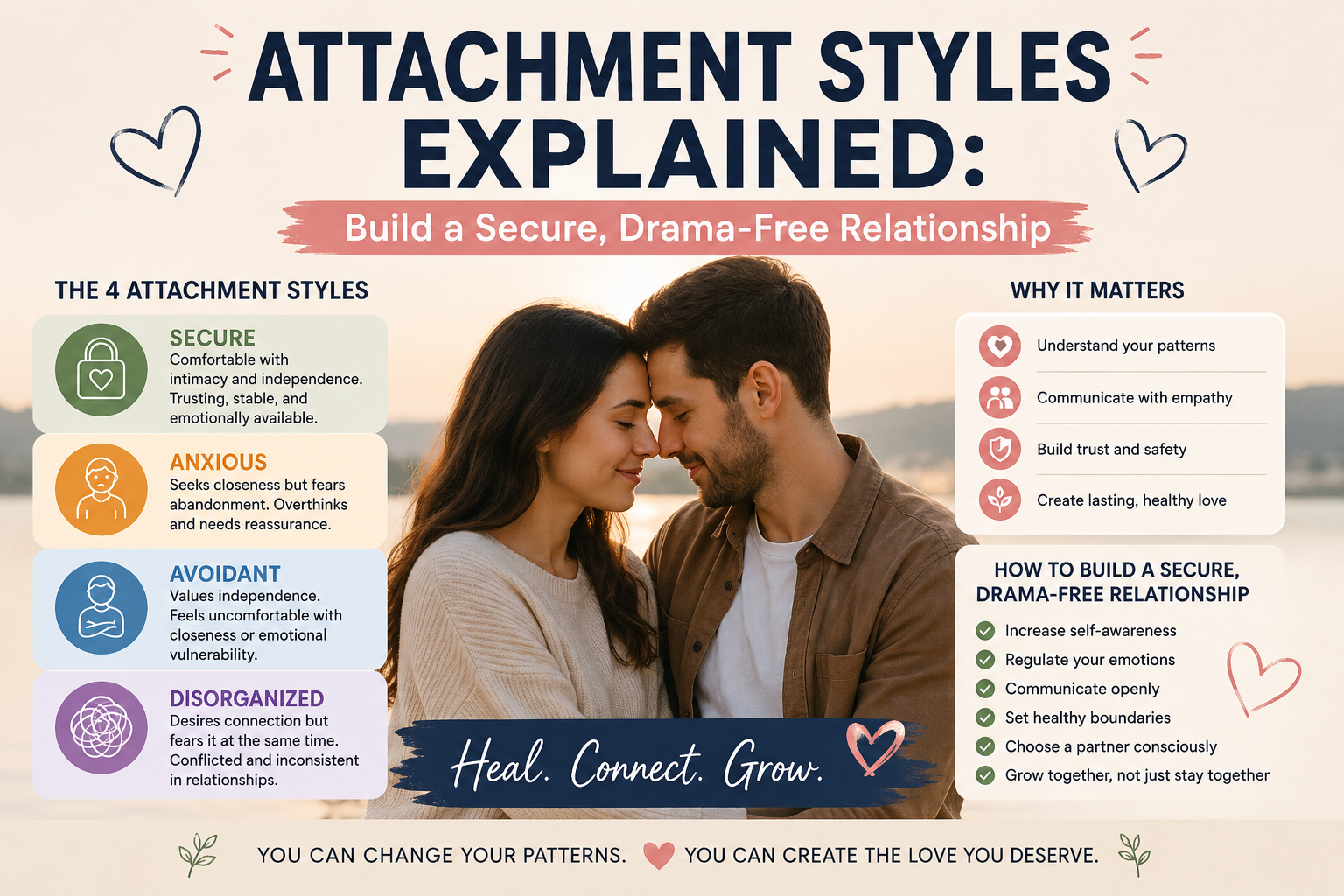
In this article, we’re diving deep into the four main attachment styles: secure, anxious, avoidant, and fearful-avoidant. I’ll break them down with real-life examples, explain how they mess with (or boost) your relationships, and,most importantly,give you actionable steps to move toward that secure style everyone secretly craves. The goal? Ditching the drama for connections that feel safe, exciting, and drama-free. Let’s get into it.
What Are Attachment Styles, Anyway?
Picture this: As a kid, your parents (or caregivers) were your first “relationship lab.” If they were reliable,picking you up when you fell, soothing your fears,you learned the world is safe, and people can be trusted. That’s the root of attachment theory. Bowlby came up with it in the 1950s, studying how babies bond with moms, and Ainsworth tested it with her famous “Strange Situation” experiments in the ’70s, watching how toddlers reacted to a stranger and their mom leaving the room.
Fast forward to adulthood, and these patterns replay in your dating life. About 50-60% of us are “secure,” meaning we handle intimacy and independence like pros. The rest? We fall into anxious (20%), avoidant (25%), or a mix called fearful-avoidant (5-10%). No one’s doomed,awareness is the first step to rewiring. It’s like upgrading your relationship software from glitchy beta to stable version 2.0.
The Secure Attachment Style: The Gold Standard
Secure folks are the relationship MVPs. They’re comfy with closeness but don’t cling or push away. Think of your chill friend who’s been with their partner for years, still flirty and independent,no jealousy fits or ghosting games.
What does it look like? They communicate openly (“Hey, I’m feeling off,wanna talk?”), trust without paranoia, and bounce back from fights quickly. In bed? Passionate but not desperate. Studies from the Journal of Personality and Social Psychology show secure people have longer, happier relationships with less divorce risk.
How’d they get there? Usually from consistent caregiving as kids. But good news,you can build it. Practice self-soothing (like journaling your wins daily) and pick partners who mirror security. I once dated a secure guy; it was refreshing,no mind games, just mutual support. Aim for this, and your love life levels up.
Anxious Attachment: The Clingy Heartbreaker
Ever been the one texting “u ok?” five times after a two-hour silence? That’s anxious attachment in action. These folks crave reassurance like oxygen. Roots? Inconsistent parenting,mom’s loving one day, distant the next. Kid learns love is unpredictable, so adults chase it hard.
Signs: Overthinking every silence, fearing abandonment, getting super upset over small stuff. “If he doesn’t reply in 10 minutes, he must hate me!” Relationships? Intense highs (when validated) and crushing lows. Data from attachment researcher Cindy Hazan shows anxious types often pair with avoidants, creating a push-pull disaster.
Real talk: My sister was anxious,always picking fights to test loyalty. It drained her partners. The fix? Self-awareness first. Track your triggers in a notes app: “Felt anxious when he worked late,what’s the evidence he’s leaving?” Therapy like CBT helps reframe thoughts. Build a “secure base” with friends or hobbies so you’re not all-in on one person. Over time, you attract secures who calm your storms.
Avoidant Attachment: The Lone Wolf Trap
Avoidants are the “I don’t need anyone” crew. They value independence over intimacy, pulling away when things get too close. Childhood clue? Emotionally distant parents who discouraged crying or neediness. Lesson learned: Rely on yourself, vulnerability is weak.
Spot them: They dodge deep talks (“I’m fine”), hate labels, and bail during conflict. Sex? Great, but no cuddling after. Research from the Adult Attachment Interview reveals avoidants report fewer emotions and shorter relationships.
I’ve got an avoidant friend,successful guy, but his dates fizzle because he ghosts post-third date. The irony? They secretly want connection but fear it. To shift: Baby-step vulnerability. Share one feeling a week, like “Work stressed me out today.” Surround yourself with secure people who model emotional safety. Books like “Attached” by Levine and Heller are gold,read it together with a partner for breakthroughs.
Fearful-Avoidant: The Emotional Rollercoaster
This one’s the wild card,also called disorganized. People crave love but flip between clinging and fleeing, thanks to chaotic or abusive upbringings. Trauma wires them for danger in closeness.
Traits: Intense passion that turns to panic. One day, “You’re my soulmate!” Next, “I need space,forever.” Relationships? Turbulent, with trust issues galore. A study in Attachment & Human Development pegs them at highest breakup rates.
It’s tough, but healing’s possible. EMDR therapy targets trauma roots, while mindfulness apps like Headspace build emotional regulation. My cousin was here,therapy plus journaling flipped her script. Now? She’s dating steadily, drama-free.
Attachment Styles at a Glance: Your Quick Reference Table
Need a cheat sheet? Here’s a table breaking down the styles, key traits, relationship impacts, and starter fixes. Print it, fridge it,whatever works.
Attachment Style
Key Traits
Relationship Impact
Quick Fix Strategies
Secure
Comfortable with intimacy & independence; great communicators
Stable, satisfying partnerships; low conflict
Maintain with self-care & open talks
Anxious
Seeks constant reassurance; fears abandonment
Push-pull cycles; high drama
Journal triggers; build non-romantic support network
Avoidant
Prioritizes self-reliance; avoids vulnerability
Emotional distance; short-lived connections
Practice small shares; read “Attached”
Fearful-Avoidant
Craves closeness but fears it; hot-cold behavior
Chaotic, trust-eroding bonds
Trauma therapy (EMDR); daily mindfulness
How Your Style Plays Out in Real Relationships
Okay, theory’s cool, but let’s talk bedroom-to-boardroom reality. Anxious + Avoidant? Classic toxic combo,the anxious chases, avoidant runs, both miserable. Secure + anyone? Magic. They soothe the insecure partner’s nerves without losing themselves.
Sex is a big tell. Anxiously attached might withhold it to test devotion; avoidants use it casually. Secures? It’s connective, fun foreplay to emotional depth. Fights? Secures apologize fast; others stonewall or explode.
Parenting loops it back,your style becomes your kid’s. Break the chain by being intentional. One study from the University of Minnesota followed couples: Those who ID’d styles early had 30% better satisfaction after a year.
Quiz: What’s Your Attachment Style?
Wanna self-diagnose? Answer these honestly (no peeking ahead):
When your partner pulls away, do you: a) Give space, b) Panic and bombard texts, c) Pull away harder, d) Flip between b and c?
Conflict hits: a) Talk it out calmly, b) Fear it’s over, c) Shut down, d) Yell then isolate?
Intimacy level: a) Just right, b) Need more, c) Too much, d) Unpredictable?
Mostly a’s? Secure. B’s? Anxious. C’s? Avoidant. D’s? Fearful-avoidant. Not scientific, but a solid start. Take the full ECR-R quiz online for precision.
Building Secure Attachment: Your Step-by-Step Roadmap
Ready to level up? Here’s the no-BS plan. It’s not overnight,think marathon, not sprint,but consistent effort pays off big.
Step 1: Know Thyself
Spend a week tracking patterns. Journal: “What triggered my freakout? What’s the story I tell myself?” Apps like Daylio make it easy. Therapy? Game-changer. Find an attachment-focused therapist via Psychology Today.
Step 2: Rewire Your Brain (Daily Habits)
Self-soothe: When anxious, breathe deep (4-7-8 technique: inhale 4, hold 7, exhale 8). Avoidants, schedule “vulnerability dates” with yourself,write unsent letters.
Earned security: Build wins. Hit the gym, crush work goals. Feeling capable spills into relationships.
Mindfulness: 10 mins daily via Insight Timer. It quiets the inner critic.
Step 3: Choose Wisely (Partner Selection)
Date secures,they’re magnets for growth. Red flags: Chronic unavailability or neediness matching your wounds. Green flags: Consistency, empathy, boundaries.
Step 4: Communicate Like a Pro
Use “I” statements: “I feel scared when you go quiet,I need a quick check-in.” Avoid blame. Couples exercises from “Hold Me Tight” by Sue Johnson work wonders.
Step 5: Long-Term Maintenance
Annual “relationship check-ins”: Rate satisfaction 1-10, tweak as needed. Parent together securely? Read “The Science of Parenting.”
I tried this post-breakup. Six months in, I’m 80% secure,dates are fun, not fraught. You got this.
Common Myths Busted
Myth 1: “Attachment style is fixed forever.” Nope,brains are plastic. Therapy shifts 20-30% of folks to secure.
Myth 2: “Secures are boring.” Ha! They’re the passionate ones without the baggage.
Myth 3: “It’s all your partner’s fault.” Own your 50%, then invite them along.
Real Stories from the Trenches
Take Sarah, 32, anxious type. Endless bad boys. After reading “Attached,” she went no-contact with drama, therapy-fueled, met a secure guy. Two years strong.
Or Mike, avoidant exec. Wife left. Men’s group + homework (sharing feelings weekly) rebuilt his marriage.
These aren’t unicorns,you can be next.
Wrapping It Up: Your Drama-Free Future Starts Now
Attachment styles aren’t destiny; they’re a map. Understand yours, tweak it toward secure, and watch relationships transform,no more eggshells, just genuine connection. You’ve got the tools: Quiz yourself, use that table, start small habits. Share this with your boo for double impact.
What’s holding you back? Dive in today. Your heart (and future exes who dodged a bullet) will thank you.
Hi Friends! I am Rohit Yadav, a web developer, digital marketer and blogger from Chandpatti, Azamgarh (U.P). I love to write a blog and share our thoughts and knowledge with other peoples.